
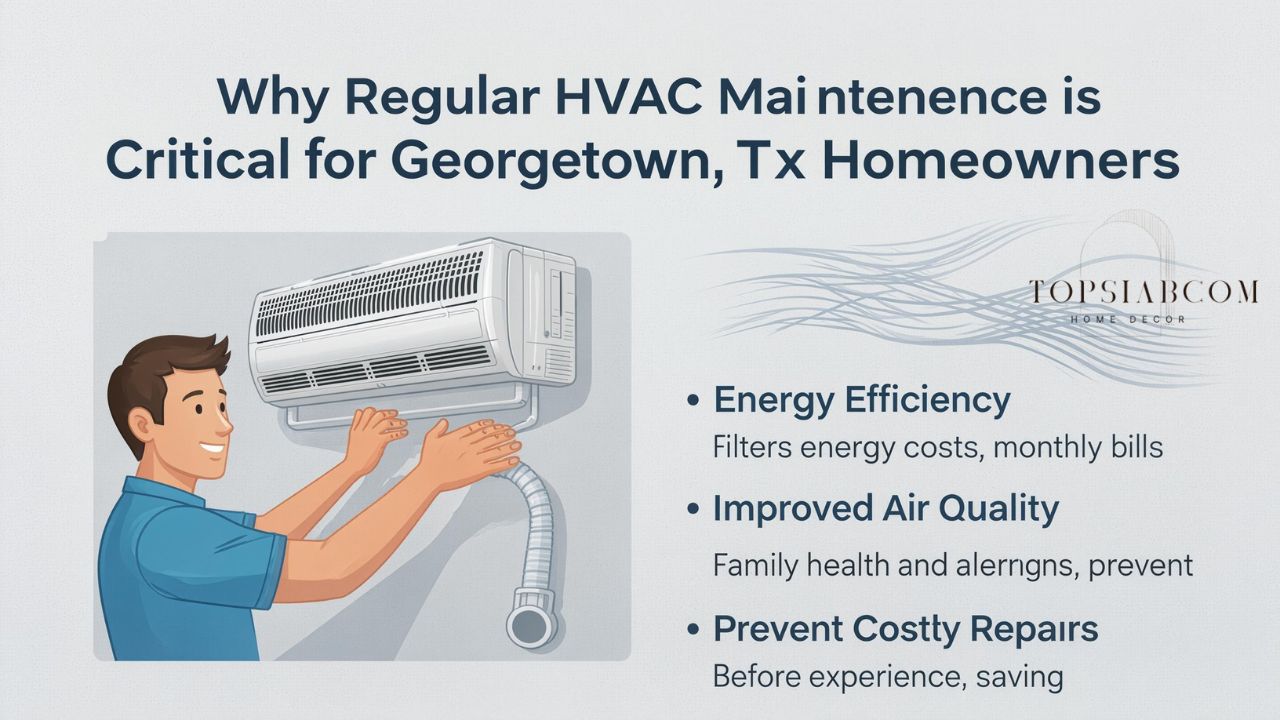
In Georgetown, TX, where summer temperatures regularly exceed 95°F and winter cold snaps can strain heating systems, a reliable HVAC system isn’t just about comfort—it’s about safety and financial prudence. Yet many homeowners treat their heating and cooling equipment as an afterthought, waiting until a breakdown forces their hand. That approach often leads to emergency repairs during the worst possible weather, inflated service costs, and potentially dangerous system failures.
Regular maintenance addresses these risks head-on. A well-maintained system operates more efficiently, lasts longer, and catches safety hazards before they escalate. This article examines why preventative HVAC care matters in Georgetown’s climate, what problems local homeowners commonly face, and how to select qualified service providers in the area.
The Case for Preventative HVAC Maintenance
Preventative maintenance delivers measurable returns across multiple dimensions:
- Cost Avoidance: Routine inspections identify worn components before they fail completely. Replacing a $150 capacitor during scheduled maintenance beats a $1,200 emergency compressor replacement on a 102-degree afternoon.
- Safety Assurance: Annual inspections catch cracked heat exchangers that could leak carbon monoxide, frayed electrical connections that pose fire risks, and refrigerant leaks that compromise system integrity.
- Energy Efficiency: Clean coils, calibrated thermostats, and proper refrigerant levels can reduce energy consumption by 15-20%. Neglected systems use significantly more electricity to achieve the same cooling output.
- Equipment Longevity: Systems receiving annual maintenance typically last 15-20 years, while neglected units often fail after 10-12 years—a difference that represents thousands in replacement costs.
Proper HVAC maintenance also improves indoor air quality by reducing dust, mold, and allergen circulation—particularly important in Central Texas, where cedar pollen and construction dust are persistent concerns. To learn more about improving indoor air quality, explore this detailed guide.
Common HVAC Problems in Georgetown’s Climate
Georgetown’s weather patterns create specific stress points for heating and cooling systems. Understanding these regional challenges helps homeowners recognize warning signs early:
- Refrigerant Loss and Cooling Failure: Texas heat pushes air conditioning systems to their limits for six months annually. Small refrigerant leaks that might go unnoticed in milder climates become obvious when your system can’t maintain 72°F despite running continuously. Low refrigerant forces compressors to work harder, accelerating wear and driving up electricity costs.
- Capacitor and Contactor Failures: These electrical components endure constant cycling during cooling season. When they fail, the system won’t start—a common cause of emergency service calls during heat waves.
- Clogged Condensate Drains: High humidity combined with heavy AC use produces substantial condensation. When drain lines clog, water backs up into the air handler, potentially causing water damage and mold growth.
- Thermostat Calibration Issues: Temperature swings between seasons can throw older thermostats out of calibration, causing systems to short-cycle or fail to reach set temperatures.
What Quality Air Conditioning Actually Delivers
Beyond simply cooling air, a properly functioning HVAC system affects multiple aspects of home life:
- Consistent Comfort: Well-maintained systems eliminate hot spots, reduce humidity to comfortable levels (typically 40-50%), and maintain even temperatures throughout the home. This consistency matters in Georgetown’s open-plan homes, where poor air distribution creates uncomfortable temperature variations between rooms.
- Lower Operating Costs: Modern systems with SEER ratings above 16 can cut cooling costs by 30-40% compared to older 10-SEER units. The ENERGY STAR program provides detailed comparisons showing how efficiency ratings translate to annual savings.
- Improved Air Quality: Quality systems with proper filtration remove pollen, dust, pet dander, and mold spores. For Georgetown residents with allergies or respiratory conditions, this filtration can significantly improve quality of life during high-pollen seasons.
- Humidity Control: Effective air conditioning removes moisture as well as heat. Proper humidity levels prevent mold growth, protect wood furniture and flooring, and make indoor spaces feel more comfortable at higher temperatures.
Selecting HVAC Service Providers in Georgetown
The Georgetown area has dozens of HVAC contractors, but quality varies considerably. These criteria help identify competent, reliable service providers:
- Licensing and Insurance: Texas requires HVAC contractors to hold licenses from the Texas Department of Licensing and Regulation. Verify current licensing and adequate liability insurance before allowing work on your system.
- Manufacturer Certifications: Major brands like Carrier, Trane, and Lennox offer factory training and certification. Certified technicians have access to technical support, warranty coverage, and specialized diagnostic tools.
- Service Range: Comprehensive providers handle installation, maintenance, and repair for both heating and cooling systems. This continuity matters when problems arise—the company that installed your system understands its configuration and history.
- Transparent Pricing: Reputable contractors provide written estimates before starting work, explain what services include, and don’t pressure customers into unnecessary upgrades or repairs.
- Local Track Record: Companies with established Georgetown presence understand local climate challenges, building codes, and common system configurations in area neighborhoods.
Companies with established Georgetown presence understand local climate challenges, building codes, and common system configurations in area neighborhoods. Quality Cooling Heating & Plumbing, Air Texas, and Intelligent Air Services are among the contractors with that kind of established Georgetown footprint.
Emerging HVAC Technologies Worth Considering
The HVAC industry has evolved significantly in recent years, with innovations that improve efficiency, comfort, and control:
- Smart Thermostats: Devices like Nest, Ecobee, and Honeywell Home learn household patterns, adjust temperatures automatically, and provide detailed energy usage data. Remote control via smartphone apps allows temperature adjustments from anywhere—useful when travel plans change or unexpected weather arrives.
- Variable-Speed Compressors: Unlike traditional single-speed systems that run at full capacity or not at all, variable-speed units adjust output to match cooling demand. This approach reduces energy consumption, eliminates temperature swings, and extends equipment life by reducing start-stop cycling.
- Zoned Systems: Multi-zone configurations use dampers in ductwork to direct conditioned air where needed. This technology makes particular sense in Georgetown’s two-story homes, where upper floors often run significantly warmer than ground levels.
- Air Quality Enhancements: UV lights that neutralize mold and bacteria, whole-home dehumidifiers, and advanced filtration systems address indoor air quality concerns beyond basic temperature control.
When considering upgrades, focus on technologies that address specific problems in your home rather than chasing the newest features. A smart thermostat delivers clear benefits; some advanced options may not justify their cost for typical residential applications.
Maintaining Year-Round Comfort in Central Texas
Georgetown’s climate demands attention to both cooling and heating systems, even though air conditioning dominates annual runtime. A comprehensive maintenance approach addresses both:
- Spring AC Preparation: Before cooling season begins, technicians should clean condenser coils, check refrigerant levels, test capacitors and contactors, verify thermostat calibration, and inspect electrical connections. This timing catches problems before heat arrives.
- Fall Heating System Checks: Even though Georgetown winters are mild, heating system failures during cold snaps create genuine discomfort and potential safety issues. Annual inspections should verify heat exchanger integrity, test ignition systems, check gas connections for leaks, and confirm proper venting.
- Filter Replacement: During heavy-use months (May through September for cooling, December through February for heating), filters should be checked monthly and replaced when dirty. This simple maintenance task significantly impacts system efficiency and air quality.
- Duct Inspection: Leaky ductwork wastes 20-30% of conditioned air in typical homes. Periodic inspection identifies disconnected sections, damaged insulation, and gaps that undermine system performance.
Homeowners comfortable with basic maintenance can handle filter changes and outdoor unit cleaning. Professional service should occur annually at minimum, with additional calls for any performance changes or unusual sounds.
Taking Action on HVAC Maintenance
Effective HVAC maintenance requires consistent attention rather than reactive crisis management. These steps establish a sustainable approach:
- Schedule Annual Service: Book spring AC maintenance and fall heating checks with a qualified local contractor. Many companies offer maintenance agreements that include priority scheduling, discounted repairs, and automatic service reminders.
- Monitor System Performance: Pay attention to cooling adequacy, unusual sounds, unexpected cycling patterns, and changes in energy bills. Early detection of problems reduces repair costs and prevents secondary damage.
- Consider System Age: Units approaching 15 years old warrant evaluation for replacement, particularly if repair costs exceed 50% of replacement value. Modern high-efficiency systems often pay for themselves through energy savings within 7-10 years.
- Document Service History: Maintain records of all maintenance, repairs, and system modifications. This documentation helps technicians diagnose problems, supports warranty claims, and provides valuable information for future owners if you sell.
Georgetown homeowners who treat HVAC maintenance as routine rather than optional consistently report fewer emergency repairs, lower energy costs, and greater confidence in their home comfort systems. The investment in preventative care—typically $150-300 annually for maintenance agreements—returns multiples of its cost through avoided repairs and improved efficiency.