Introduction
When you live in a hot, dry climate—or simply want a yard that doesn’t demand constant watering—desert landscape ideas can transform your outdoor space into something both stunning and practical. Instead of fighting the climate, desert landscaping works with nature, creating beautiful environments that thrive with minimal water and maintenance.
Think of golden gravel pathways, sculptural cacti, dramatic agave plants, and weathered stones arranged like natural artwork. A well-designed desert garden can feel peaceful, modern, and surprisingly lush—even in arid conditions.
Many homeowners today are turning toward drought-friendly landscapes not only to conserve water but also to create unique outdoor spaces that stand apart from traditional lawns. Whether you live in the American Southwest, Australia, the Middle East, or any dry region, these design ideas can inspire a yard that is both sustainable and visually captivating.

Understanding Desert Landscaping
Desert landscaping, often called xeriscaping, is a gardening style designed specifically for dry climates. Instead of lush lawns and thirsty plants, it focuses on drought-tolerant vegetation, efficient irrigation, and natural materials like gravel, sand, and stone.
In simple terms, desert landscaping means building a yard that thrives in heat and limited rainfall.
Key Characteristics of Desert Landscapes
- Drought-tolerant plants such as cacti and succulents
- Gravel or rock ground cover instead of grass
- Minimal irrigation systems
- Natural textures and earthy color palettes
- Strategic plant placement to mimic nature
The beauty of this approach is that it reduces water use dramatically while still creating visually interesting landscapes.
Why Desert Landscaping Is Growing in Popularity
Over the past decade, homeowners around the world have increasingly embraced desert landscape ideas. Rising water costs, climate change, and sustainability concerns have pushed many people toward drought-friendly garden designs.
Environmental Benefits
| Benefit | Explanation |
|---|---|
| Water Conservation | Desert gardens use up to 60–80% less water |
| Low Maintenance | Minimal mowing, fertilizing, or watering |
| Climate Adaptation | Plants thrive in hot temperatures |
| Sustainability | Supports eco-friendly landscaping |
Cities like Phoenix, Las Vegas, and Dubai have seen widespread adoption of xeriscaping as residents seek ways to conserve water while maintaining attractive yards.
However, desert landscaping isn’t just about saving water—it’s also about aesthetic appeal.
15 Creative Desert Landscape Ideas for Stunning Yards
Designing a beautiful desert yard requires creativity and balance between plants, rocks, and open space.

Rock Garden Landscapes
Rock gardens are one of the most popular desert landscape ideas because they mimic natural desert terrain.
Using large boulders and decorative stones creates dramatic visual texture.
Tips for rock gardens:
- Combine rocks of different sizes
- Add gravel between stones
- Plant small succulents in clusters
The result is a low-maintenance yet visually striking yard.
Cactus Feature Gardens
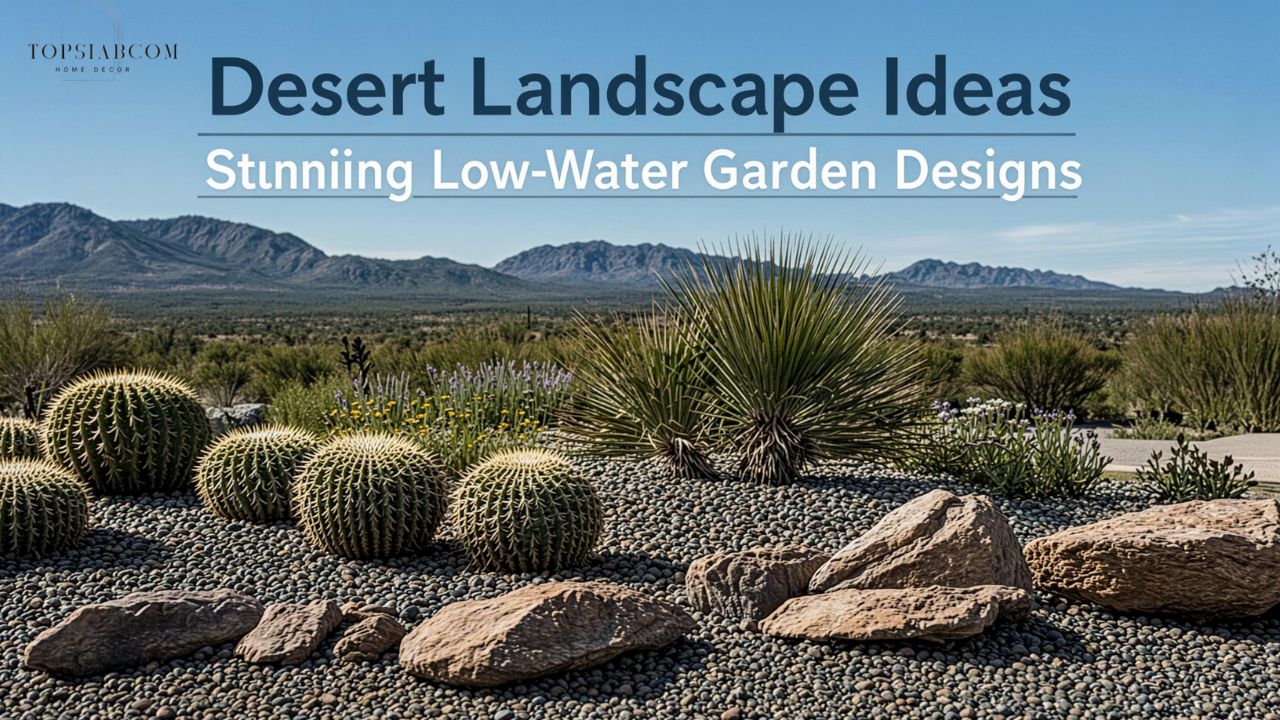
Cactus plants provide sculptural beauty that instantly defines a desert landscape.
Popular cactus varieties include:
- Saguaro cactus
- Barrel cactus
- Prickly pear cactus
- Golden torch cactus
Planting them in small clusters creates a natural desert look.
Desert Pathways with Gravel
Instead of concrete paths, desert gardens often feature gravel walkways.
Benefits include:
- Excellent drainage
- Natural appearance
- Affordable installation
Combine gravel paths with stone stepping slabs for visual contrast.
Succulent Gardens
Succulents add color, geometry, and texture to desert landscapes.
Popular varieties:
- Aloe
- Echeveria
- Agave
- Sedum
Their water-storing leaves make them ideal for hot climates.
Raised Desert Plant Beds
Raised beds add dimension to otherwise flat landscapes.
Benefits:
- Better soil control
- Improved drainage
- Enhanced visual structure
They also make plant arrangements more noticeable.

Desert Courtyard Gardens
Courtyard gardens are common in Mediterranean and southwestern homes.
Features include:
- Stone seating areas
- Decorative pots
- Shade structures
These spaces become relaxing outdoor living areas.
Minimalist Desert Gardens
Modern desert landscaping often follows minimalist design principles.
Characteristics:
- Clean geometric lines
- Limited plant varieties
- Neutral colors
This approach works especially well with contemporary homes.
Decorative Desert Boulders
Large natural stones can become focal points in desert landscapes.
Strategically placed boulders create a sense of permanence and natural beauty.
Desert Wildflower Gardens
Adding native wildflowers introduces seasonal color.
Examples include:
- Desert marigold
- California poppy
- Blue flax
These flowers thrive in dry climates while attracting pollinators.
Desert Zen Gardens
Zen-inspired desert landscapes use sand patterns and simple elements.
Key features:
- Raked gravel
- Minimal plants
- Natural stones
The design emphasizes calm and mindfulness.
Artificial Dry Riverbeds
Dry creek beds simulate natural water flow.
Benefits include:
- Improved drainage
- Unique design element
- Natural desert aesthetic
These features are especially useful in sloped yards.
Outdoor Fire Pit Areas
Desert evenings can become cool and inviting.
A fire pit area surrounded by gravel and succulents creates a cozy gathering space.
Desert Shade Structures
Pergolas and shade sails make desert landscapes more usable during hot days.
These structures provide comfort without disrupting the natural look.
Terraced Desert Gardens
For sloped properties, terraced landscaping adds structure and prevents erosion.
Each level can feature different plant varieties.

Modern Lighting in Desert Landscapes
Lighting dramatically enhances nighttime desert gardens.
Ideas include:
- Solar pathway lights
- Spotlights on cacti
- Soft ambient landscape lighting
These features highlight textures and plant shapes.
Choosing the Best Plants for Desert Gardens
Selecting the right plants is essential for successful desert landscape ideas.

Best Drought-Tolerant Plants
| Plant | Features |
|---|---|
| Agave | Sculptural and dramatic |
| Yucca | Tall architectural form |
| Aloe | Thick leaves store water |
| Desert Spoon | Hardy desert shrub |
| Lavender | Adds fragrance and color |
These plants thrive with minimal irrigation.
Hardscape Elements That Elevate Desert Design
Hardscaping plays a huge role in desert gardens.
Common materials include:
- Gravel
- Flagstone
- Sand
- Natural stone
- Decomposed granite
Why Hardscaping Matters
Hardscape elements:
- Reduce water use
- Create structure
- Define garden zones
Many successful desert landscape ideas rely on carefully balanced hardscape and plant elements.
Designing a Functional Desert Landscape Layout
A beautiful yard must also be practical.
Layout Principles
- Group plants by water needs
- Leave open space for visual balance
- Use pathways to guide movement
- Place focal plants strategically
Landscape designers often follow the “rule of three” when arranging desert plants.
Common Mistakes to Avoid in Desert Landscaping
Even though desert gardens require less water, they still need thoughtful planning.
Avoid These Mistakes
- Overplanting the yard
- Using non-native plants
- Ignoring soil drainage
- Installing too much gravel without plants
- Forgetting shade areas
Balancing hardscape and greenery is key.
Desert Landscaping Costs and Budget Planning
Desert landscaping can actually save money over time.
Average Landscaping Costs
| Element | Estimated Cost |
|---|---|
| Gravel installation | $2–$5 per sq ft |
| Cactus plants | $20–$200 each |
| Boulders | $100–$500 |
| Irrigation system | $500–$2000 |
Although installation may cost initially, long-term maintenance costs are much lower than traditional lawns.
FAQ
What plants work best in desert landscaping?
Plants such as agave, cactus, aloe, yucca, and lavender thrive in desert climates because they require little water and tolerate high temperatures.
Are desert landscapes expensive to build?
Initial installation may cost several thousand dollars depending on materials and plant size. However, long-term maintenance costs are significantly lower.
Do desert landscapes require irrigation?
Yes, but typically minimal irrigation systems such as drip irrigation are used instead of sprinklers.
Can desert landscaping work in non-desert climates?
Yes. Many homeowners in dry or drought-prone areas use desert landscape ideas to conserve water.
What ground cover works best for desert gardens?
Common options include gravel, decomposed granite, and sand.
How often should desert plants be watered?
Most desert plants require watering every two to three weeks depending on climate and soil conditions.
Can you mix desert landscaping with traditional gardens?
Yes. Many homeowners combine xeriscaping with small lawn areas for visual balance.
Are desert landscapes environmentally friendly?
Absolutely. They reduce water consumption and often use native plants that support local ecosystems.
Conclusion
A well-planned desert garden can transform a dry yard into a striking outdoor retreat. By combining drought-tolerant plants, natural stones, and thoughtful layout design, homeowners can create landscapes that are both beautiful and sustainable.
The best desert landscape ideas embrace the natural environment rather than resisting it. From sculptural cactus gardens to minimalist gravel pathways, these landscapes celebrate simplicity, resilience, and harmony with nature.
With the right design approach, a desert landscape becomes more than just a yard—it becomes a peaceful sanctuary that thrives even under the harshest sun.