Most homeowners put real thought into the inside of their home and almost none into the outside. You plant the garden, add a patio, and then realize your neighbor’s deck has a direct view of your entire yard. If privacy was an afterthought, the fix usually feels like one too: a trellis here, a potted shrub there, nothing that actually works.
Garden privacy fence getting privacy right in a garden takes a plan. When done well, it adds both comfort and real resale value. This guide covers practical, durable approaches to creating a garden space that actually feels like yours.
What makes a garden feel truly private?
A garden feels private when sight lines, sound, and wind are managed together. Visual privacy alone (say, a short fence) does not create the enclosed, retreat-like feeling most homeowners are after. What actually works is a combination of:
- A fence or screen that creates a clear physical boundary
- Height of at least 6 feet to block standing sight lines
- Layered depth, so you are not just staring at a wall
- Sound buffering from dense plantings or solid fence panels
When all four work together, the space stops feeling like an open yard with barriers and starts feeling like a room with outdoor walls.
Which fencing material holds up best in a garden?
Aluminum is the best material for garden privacy fencing. It does not rot, warp, or rust, and it requires no seasonal treatment, which matters a lot given what garden conditions actually involve: moisture, soil contact, shade, and years of freeze-thaw cycles.
Cedar and pressure-treated wood are the most common alternatives, and they struggle specifically because of what makes gardens appealing. A wooden fence post buried in garden soil starts rotting from the base within a few seasons. The University of Missouri Extension notes that untreated wood posts in soil contact can show structural decay within 3-5 years, depending on moisture levels. Most
homeowners notice the lean before they expect it.
Vinyl avoids the rot issue but introduces brittleness in cold climates. Below -20 degrees C, standard vinyl becomes fragile enough to crack on impact. And cracked vinyl panels cannot be repaired, only replaced. That is a more expensive failure than it sounds.
Aluminum avoids both problems. Privacy aluminum fence panels from PrimeAlux (https://primealux.ca/privacy-aluminum-fence/), for example, are wind load tested to 220 km/h, carry a Class A fire rating under ASTM E84, and use a 3-layer wood-grain coating that holds its finish without paint or stain. The posts are buried 3 feet deep and set in concrete. That is a permanent installation, not a seasonal one.
What height should a garden privacy fence be?
Six feet is the standard for garden privacy fencing, and it works for most seated and standing sight lines from neighboring yards at typical lot distances. If your garden is overlooked from above (a raised neighbor’s deck, a sloped lot, a second-story window), 8 feet provides better coverage without requiring a variance permit in most Canadian municipalities.
A useful approach: stand in the part of your yard where you want the most privacy. Note the exact angle of the neighboring vantage point and work from that, rather than assuming 6 feet is enough everywhere. Many homeowners install 6-foot panels and later wish they had gone to 8 feet in one section, usually the section closest to a raised deck next door.
Panel sizes generally run from 4×6 feet up to 8×8 feet, with custom configurations available. A semi-privacy fence design (primealux.ca/semi-privacy-aluminum-fence), with slightly spaced slats, allows airflow while still blocking direct sight lines. That matters in gardens where ventilation affects plant health.
How should you integrate a privacy fence with garden plantings?
A fence alone looks like a barrier. Paired with plantings, it reads as a garden wall, which is a different thing entirely.
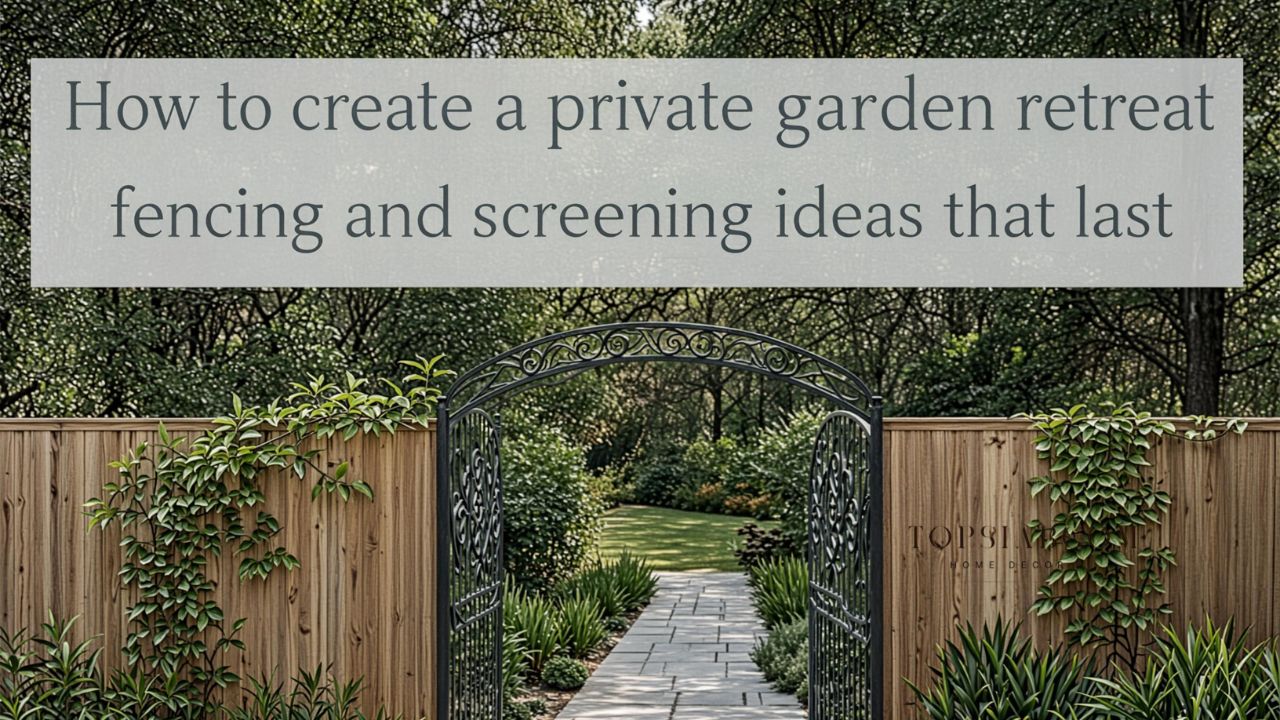
Climbing plants are a popular pairing. Climbing hydrangea, Virginia creeper, and jasmine grow well against a fence without needing it to hold a full trellis system. The key is leaving 2 to 3 inches between the plant support and the fence surface so air can circulate. That prevents moisture buildup against the coating and keeps both the plant and the finish in better shape long term.
Raised planting beds along the fence line add depth and make the whole setup look intentional. A 2-foot-deep bed at the base, planted with a mix of heights (ornamental grasses at the front, shrubs in the middle, taller perennials at the back), creates the layered look that makes a privacy screen feel designed rather than defensive.
Trees and large shrubs offer a different kind of privacy, one that grows over years rather than providing immediate coverage. Cedars, arborvitae, and boxwood work here, though they take several seasons before they actually block sight lines. They work best as supplements to a fence, not replacements.
How much does garden privacy fencing cost?
Installed aluminum privacy fencing in Canada typically runs in the $80-$120 per linear foot range, depending on height, finish, and configuration. A 40-foot garden fence run would come in at roughly $3,200-$4,800 installed, supply and labour included.
Wood fencing costs less upfront, usually $30-$60 per linear foot installed, but the lifecycle cost tells a different story. Staining runs $400-$800 every 2-3 years, posts eventually need replacing as they rot underground, and a full replacement comes due in 8-12 years. Homeowners who calculate the 20-year cost of a wood fence often find it compares poorly to aluminum’s one-time installation with no ongoing maintenance.
The other hidden cost is what the fence does to property value at resale. A fence that looks worn within 5 years is a negotiating point against you. A fence that still looks new at 15 years is a legitimate selling feature.
Frequently asked questions
What is the most low-maintenance privacy fence for a garden?
Aluminum is the most low-maintenance option. It does not rot, rust, or warp, and it does not need painting or staining. Occasional cleaning with water is all it requires. Wood needs staining every 2-3 years and post replacement as it ages; vinyl can crack in cold climates and cannot be repaired once damaged.
How deep should fence posts be set in a garden?
Posts in garden settings should be buried a minimum of 3 feet deep and set in concrete. That depth handles frost heave and the softer soil conditions typical of maintained garden areas. Posts set shallower than 3 feet are more likely to lean over time, particularly in climates with hard winters.
Can you install a privacy fence next to garden beds?
Yes. Leave 2-3 inches of clearance between the fence and any planting bed. That gap allows air circulation, prevents moisture buildup against the fence surface, and gives plants room to grow without pressing against the structure. Aluminum is particularly well-suited to garden-adjacent placement because it does not react to soil contact the way wood does.
What fence color works best in a garden setting?
Natural wood-grain tones work well. Walnut, grey walnut, and grey brown finishes integrate with most planting palettes without competing with them. These tones tend to recede visually rather than dominate, which is what most people want from a fence in a naturalistic garden.
Do I need a permit to install a privacy fence?
Permit requirements vary by municipality. In most Canadian cities, fences over 6 feet in height require a permit, and fences over 4 feet in front yard areas may also need approval. Check with your local building department before starting. A good fence installer will confirm local requirements during the quoting process.
A garden space worth actually using
Privacy changes how you use outdoor space. A garden that feels exposed gets used for utility: moving things, quick tasks, keeping your head down. A garden that feels enclosed gets used for living: meals, reading, quiet mornings, evening drinks. The payoff from a properly planned privacy setup is how much time you actually want to spend outside.
Start with the right fence material, get the height calibrated to your actual sight lines, and then layer in plantings to make it feel designed rather than defensive. That sequence matters. A fence that fails in 5 years undoes everything planted around it.