Introduction
Walk into any stylish bar, and one of the first things you notice isn’t just the drinks—it’s the glassware. From elegant stems to sturdy tumblers, cocktail glasses quietly shape how a drink looks, smells, and even tastes.
Most people don’t realize how much the right glass can elevate a simple drink. A margarita served in the wrong glass feels… off. In reality, glass shape influences aroma, temperature, dilution, and the overall drinking experience.
Whether you’re building a home bar, running a restaurant, or simply curious about why mixologists care so much about presentation, understanding cocktail glasses helps you make smarter, more satisfying choices.

What Are Cocktail Glasses
Cocktail glasses are specially designed drinkware intended to enhance mixed drinks, spirits, and classic cocktails. Unlike everyday tumblers, they’re engineered with specific shapes, rims, and capacities to support aroma release, temperature control, and visual appeal.
At their core, these glasses serve three purposes:
- Function – preserving temperature and balance
- Aroma – directing scent toward the nose
- Presentation – making the drink visually inviting
That balance between science and style is why glass choice matters more than most people assume.

Why Cocktail Glasses Matter More Than You Think
On the surface, a glass seems like a container. However, research in sensory perception shows that aroma contributes up to 80% of perceived taste. The shape of a glass directly influences how aromas reach your nose.
That’s why:
- A martini glass keeps drinks colder longer
- A coupe reduces spillage while preserving aroma
- A rocks glass encourages slow sipping
On the other hand, using the wrong glass can flatten flavors, warm drinks too quickly, or even ruin carbonation. In professional settings, glassware consistency also signals quality and expertise.
Main Types of Cocktail Glasses and Their Uses
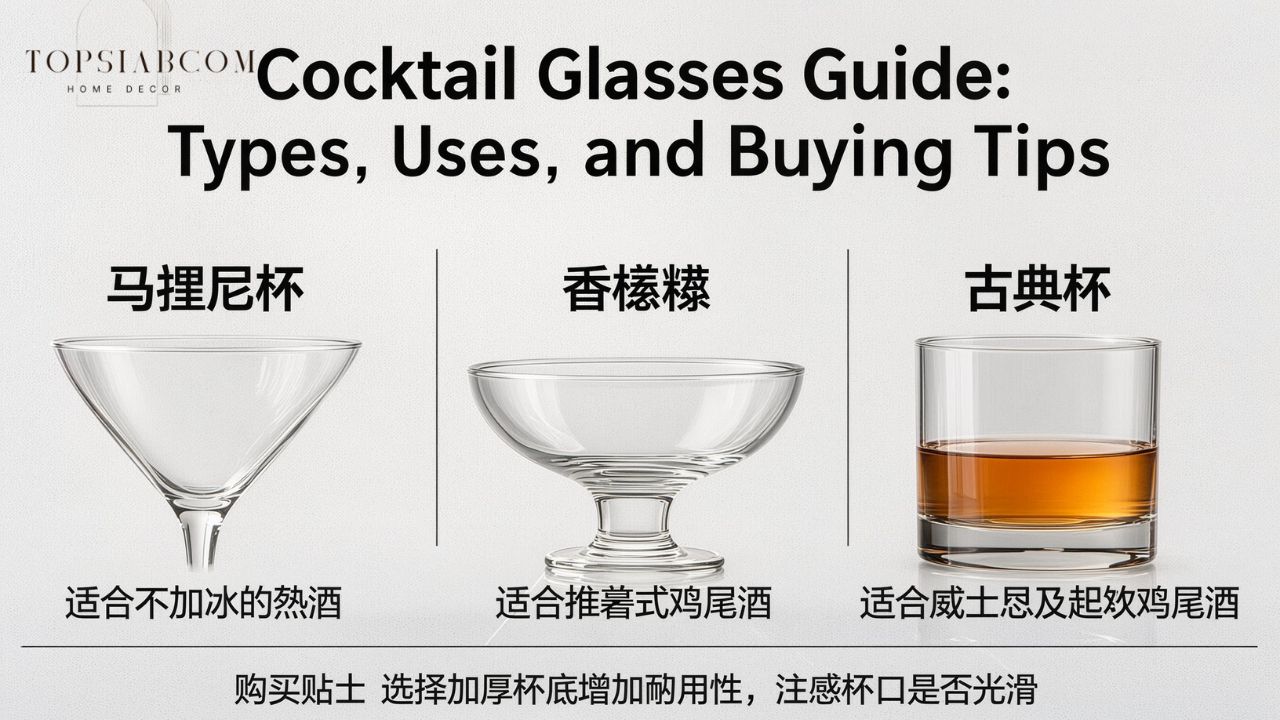
Martini Glass
Recognized by its iconic V-shape, this glass is designed for spirit-forward drinks served without ice.
Best for:
- Martini
- Cosmopolitan
- Gibson
Its wide rim enhances aroma but requires careful handling.
Coupe Glass
Originally created for champagne, the coupe has become a modern mixology favorite.
Best for:
- Sidecar
- Daiquiri
- Manhattan variations
Compared to martini glasses, coupes are more stable and spill-resistant.
Highball Glass
Tall and straight, this glass supports carbonation and layered drinks.
Best for:
- Gin and tonic
- Mojito
- Vodka soda
The height preserves bubbles and keeps drinks refreshing longer.
Lowball (Rocks) Glass
Short, sturdy, and timeless.
Best for:
- Old Fashioned
- Negroni
- Whiskey on the rocks
The wide opening allows for muddling and slow dilution.
Nick and Nora Glass
A refined, vintage-inspired alternative to the martini glass.
Best for:
- Classic stirred cocktails
- Elegant presentations
Its curved bowl captures aroma while maintaining balance.
Margarita Glass
With its stepped bowl and wide rim, it’s built for salt or sugar garnishes.
Best for:
- Margarita variations
- Frozen cocktails
Though often overused, it still serves a functional purpose when sized correctly.

Matching Drinks to the Right Cocktail Glasses
Choosing the correct glass isn’t about rules—it’s about intent.
| Drink Style | Recommended Glass | Why It Works |
|---|---|---|
| Spirit-forward | Coupe, Nick & Nora | Concentrates aroma |
| Carbonated | Highball | Preserves bubbles |
| On the rocks | Lowball | Controls dilution |
| Frozen | Margarita | Supports texture |
| Aromatic | Martini-style | Enhances scent |
However, modern bartending embraces flexibility. Many bars now use coupes for drinks once reserved for martini glasses due to practicality.
Materials, Thickness, and Craftsmanship Explained
Not all glassware is created equal.
Soda-Lime Glass
- Affordable
- Widely available
- Less resistant to breakage
Crystal Glass
- Thinner rims
- Better light refraction
- Enhanced drinking experience
Crystal doesn’t necessarily mean fragile. In reality, lead-free crystal offers strength with elegance, making it ideal for premium cocktail glasses.
Choosing Cocktail Glasses for Home vs Professional Bars
For Home Bars
- Focus on versatility
- Limit to 4–6 essential styles
- Choose dishwasher-safe options
For Professional Bars
- Prioritize durability
- Maintain consistent sizing
- Buy replacements in bulk
In high-volume environments, durability often outweighs visual perfection. That said, presentation still plays a role in customer perception and tips.
Care, Storage, and Longevity Tips
Proper care dramatically extends glassware life.
Best practices:
- Hand wash delicate pieces
- Avoid stacking rim-to-rim
- Store upright when possible
- Use soft microfiber towels for drying
That said, many modern cocktail glasses are designed to withstand commercial dishwashers—always check manufacturer guidelines.
Buying Guide: What to Look for Before You Purchase
Before clicking “buy,” consider the following:
- Rim thickness – thinner rims feel smoother
- Weight balance – prevents tipping
- Capacity – avoids over-pouring
- Replacement availability – crucial for bars
A balanced collection beats owning dozens of mismatched glasses that rarely get used.
Common Mistakes People Make with Cocktail Glasses
Even enthusiasts slip up.
- Buying novelty shapes over functional designs
- Ignoring drink volume vs glass capacity
- Using fragile glassware in busy settings
- Prioritizing looks over comfort
In reality, the best glass is one that enhances both the drink and the drinking moment.
FAQs About Cocktail Glasses
What are the most essential cocktail glasses to own?
A coupe, highball, lowball, and martini-style glass cover most drinks.
Are expensive cocktail glasses worth it?
Yes, if you value aroma, mouthfeel, and presentation.
Can I serve any cocktail in any glass?
Technically yes, but the experience may suffer.
What size should cocktail glasses be?
Most classics range between 5–8 oz for stemware and 10–14 oz for tall glasses.
Do cocktail glasses affect taste?
Indirectly, yes—through aroma concentration and temperature control.
Is crystal better than regular glass?
Crystal offers thinner rims and better clarity but requires more care.
How many cocktail glasses should a home bar have?
Four to six styles are usually sufficient.
Conclusion
Cocktail glasses are more than decorative accessories—they’re silent contributors to taste, aroma, and enjoyment. From the first impression to the final sip, the right glass enhances every detail of the drinking experience.
Whether you’re refining your home bar or selecting glassware for a professional setting, thoughtful choices pay off. When form meets function, even the simplest drink feels intentional—and that’s where great cocktails truly begin.