Introduction
If you’ve ever stood in your kitchen mid-recipe thinking, “There has to be an easier way to do this,” you’re not alone. The right kitchen tools can turn cooking from a daily chore into something genuinely enjoyable, efficient, and even creative.
In reality, cooking isn’t just about skill—it’s about leverage. A sharp knife saves time and prevents accidents. A sturdy pan cooks food evenly. The tools you use quietly shape every meal you make, whether you notice it or not.
That’s why understanding which tools actually matter—and which ones are just clutter—is so important. This guide cuts through the noise to help you build a kitchen that works with you, not against you.

What Are Kitchen Tools and Why They Matter
Defining Kitchen Tools
Kitchen tools are the physical instruments used to prepare, cook, bake, serve, and store food. They range from simple hand tools like knives and peelers to specialized items like thermometers and mandolins.
However, not all tools are created equal. Some improve speed, safety, and consistency. Others simply take up drawer space.
Why the Right Tools Change Everything

The impact is subtle but powerful:
- Faster meal prep
- Better texture and flavor
- Less physical strain
- More confidence while cooking
When you invest in kitchen tools that match your habits, cooking becomes smoother and more intuitive.
Essential Kitchen Tools Every Home Should Have
Core Tools You’ll Use Daily
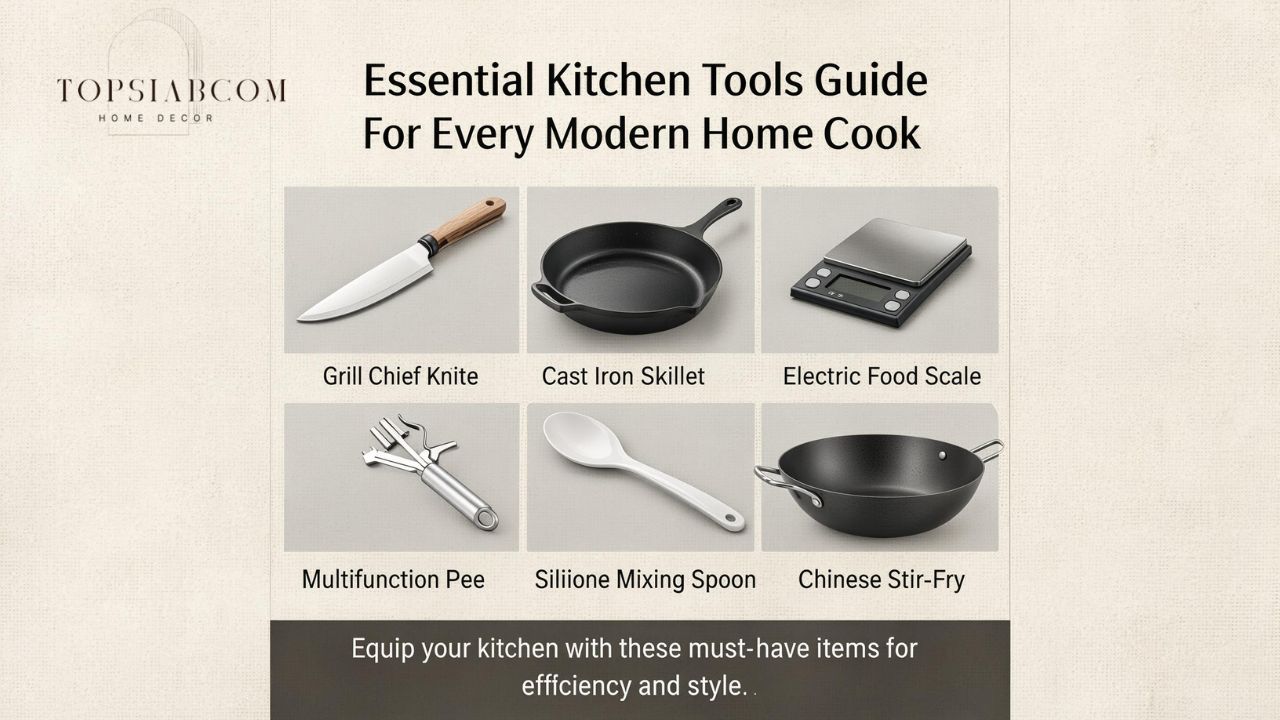
These are non-negotiables—tools that earn their place through constant use:
- Chef’s knife (8–10 inches)
- Cutting board (wood or rubber)
- Mixing bowls (varied sizes)
- Measuring cups and spoons
- Silicone or wooden spatula
- Tongs
- Whisk
These basics handle 70–80% of everyday cooking tasks.
Knives: The Backbone of the Kitchen
A common myth is that you need a full knife block. In reality, three knives cover most needs:
- Chef’s knife
- Paring knife
- Bread knife
A well-maintained blade is safer than a dull one, reducing slips and uneven cuts.
Food Preparation Tools That Save Time

Tools That Eliminate Busywork
Food prep is where most people lose patience. The right tools change that:
- Vegetable peeler with swivel blade
- Box grater or microplane
- Garlic press or rocker
- Food processor (optional but powerful)
These tools don’t just save minutes—they save energy.
Manual vs Electric Prep Tools

Electric tools are helpful, but not always necessary. A sharp knife often outperforms gadgets for small tasks. On the other hand, batch cooking benefits hugely from food processors or stand mixers.
Cooking Tools That Improve Results
Heat Control Matters
Cooking success often comes down to temperature control. Essential cooking tools include:
- Heavy-bottomed skillet
- Saucepan with lid
- Stockpot
- Instant-read thermometer
A thermometer alone can eliminate overcooked meat and undercooked food anxiety.
Utensils That Protect Cookware
Metal tools scratch nonstick surfaces. Safer options include:
- Silicone spatulas
- Wooden spoons
- Nylon turners
This small choice extends the life of your cookware significantly.
Baking Tools for Precision and Consistency
Baking Is Science
Unlike cooking, baking tolerates little guesswork. Essential baking tools include:
- Digital kitchen scale
- Measuring spoons (accurate sets)
- Mixing bowls
- Baking sheets
- Cooling rack
Why Scales Beat Cups
Professional bakers rely on weight, not volume. A scale improves consistency and reduces cleanup—no extra cups to wash.
Smart Kitchen Gadgets: Helpful or Hype?
Tools Worth Owning
Some modern gadgets truly earn their keep:
- Immersion blender
- Air fryer
- Rice cooker
- Electric kettle
These tools solve specific problems efficiently.
Tools That Often Disappoint
On the other hand, single-use gadgets tend to gather dust:
- Banana slicers
- Egg separators
- Specialty choppers
Before buying, ask: Will I use this weekly?
How to Choose the Right Kitchen Tools

Match Tools to Your Cooking Style
Someone who cooks daily needs different tools than a weekend baker. Be honest about your habits:
- Do you cook from scratch?
- Do you meal prep?
- Do you bake often?
Buy for reality, not aspiration.
Materials Matter
Common materials include:
- Stainless steel: durable and neutral
- Silicone: heat-resistant and gentle
- Wood: classic and cookware-safe
Avoid cheap plastics that warp or retain odors.
Care, Storage, and Longevity Tips
Proper Maintenance
Even premium tools fail with poor care:
- Hand wash knives
- Dry wooden tools immediately
- Avoid stacking heavy cookware without protection
Smart Storage Ideas
- Drawer organizers
- Magnetic knife strips
- Hanging utensil racks
Good storage protects tools and saves time.
FAQ About Kitchen Tools
What kitchen tools do beginners really need?
Start with a chef’s knife, cutting board, skillet, saucepan, spatula, and measuring tools. Build gradually as skills grow.
How often should kitchen tools be replaced?
High-quality tools last years. Replace when performance drops or safety becomes an issue.
Are expensive kitchen tools worth it?
Sometimes. Pay more for knives and pans, less for utensils.
What are the most overlooked kitchen tools?
Thermometers, scales, and sharp knives are often underestimated but hugely impactful.
How many kitchen tools is too many?
If you don’t use it monthly, reconsider keeping it.
Do professional chefs use gadgets?
Yes—but selectively. Professionals value reliability over novelty.
How do I maintain knives properly?
Use honing rods regularly and professional sharpening once or twice a year.
Conclusion
At the end of the day, kitchen tools aren’t about status or aesthetics—they’re about making everyday cooking easier, safer, and more satisfying. The right tools quietly support you, helping meals come together with less effort and more confidence.
Instead of chasing trends, focus on quality, usefulness, and fit for your lifestyle. Build your kitchen intentionally, and it will reward you every single day you cook.