
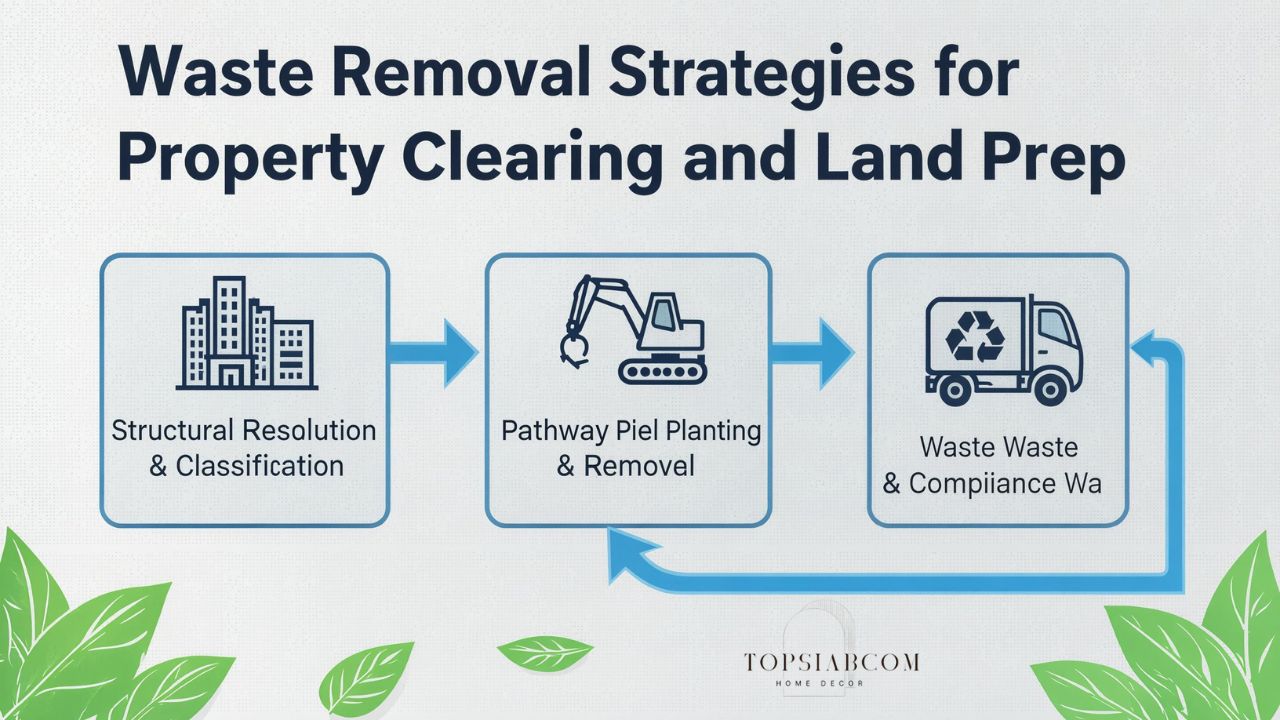
Property clearing and land preparation projects are the foundation of many construction and development efforts. Before any building begins, contractors must remove vegetation, trees, existing structures, and surface materials to create a workable site. While this phase may seem straightforward, it produces a large and varied volume of debris that must be managed carefully to keep the project moving efficiently.
Unlike more controlled construction environments, land clearing projects are spread across wide areas and often involve heavy equipment operating simultaneously. Debris is generated quickly and in multiple locations, making it easy for waste to accumulate and disrupt workflow if not handled properly. For contractors, developing a clear waste removal strategy is essential for maintaining productivity, protecting equipment access, and preparing the site for the next phase of work.
Understanding the Types of Debris Generated
Land clearing projects produce a diverse mix of materials that vary in both size and weight. Vegetation such as trees, brush, and roots can take up significant space, while soil, rocks, and remnants of old structures add weight and complexity to disposal. These materials often require different handling approaches, especially when large volumes are generated in a short time.
In many cases, debris is not produced in a single phase but continues throughout the clearing process as crews move across the property. This ongoing generation means that waste management cannot be treated as a one-time task. Contractors must plan for continuous removal to prevent materials from piling up and interfering with equipment and crew movement.
Planning Waste Removal Before Clearing Begins
One of the most effective strategies for managing debris is to plan removal before clearing work starts. Once equipment begins operating, debris accumulates rapidly, and delays in removal can create immediate bottlenecks. By evaluating the scope of the project ahead of time, contractors can estimate the types and volumes of materials that will be generated and determine how they will be handled.
This planning phase should include identifying disposal methods, selecting appropriate containers, and coordinating removal schedules. Establishing a clear plan ensures that waste removal aligns with clearing activities, allowing crews to work without interruption. Preparation at the outset reduces the risk of delays and helps maintain steady progress throughout the project.
Managing Debris Across Large Work Areas
Land clearing projects often cover expansive areas, which makes debris management more challenging than on confined job sites. Materials can be generated in multiple zones simultaneously, especially when several pieces of equipment are working at once. Without coordination, debris may be scattered across the property, increasing the time required for cleanup and reducing overall efficiency.
To address this, contractors should create a system for directing debris toward designated collection or disposal points. This may involve using centralized containers or staging areas that are strategically located to serve different parts of the site. By organizing debris flow, contractors can reduce unnecessary movement and maintain better control over the work environment.
Coordinating Waste Removal with Equipment Operations
Heavy equipment plays a central role in land clearing, and its efficiency depends on having clear, unobstructed access to work areas. Debris that is left in place can interfere with equipment movement, forcing operators to slow down or reposition materials before continuing work. This not only reduces productivity but can also increase wear on machinery.
Coordinating waste removal with equipment operations helps prevent these issues. Contractors should ensure that debris is cleared regularly from active work zones, allowing equipment to operate at full capacity. Keeping pathways open and work areas free of obstacles supports both efficiency and safety on the site.
Strategic Placement of Disposal Containers
The placement of disposal containers is a critical factor in effective waste management for land clearing projects. Containers must be positioned where they are accessible to crews and equipment while also being located on stable ground that can support heavy loads. Poor placement can lead to increased travel time, inefficient loading, and potential site damage.
Working with providers such as Waste Removal USA can help contractors determine optimal container placement based on site conditions and project scope. Proper positioning allows for direct loading from equipment, reducing the need for manual handling and improving overall workflow. Strategic placement ensures that waste removal supports, rather than hinders, project progress.
Balancing Volume and Weight in Debris Handling
Land clearing generates both high-volume and high-weight materials, and managing these effectively requires careful planning. Vegetation may take up significant space in a container, while soil and rock can quickly reach weight limits even when the container is not full. Balancing these factors is essential for maximizing efficiency and avoiding overloading.
Contractors should be mindful of how materials are combined and loaded, distributing weight evenly and using available space effectively. Separating certain types of debris when possible can also improve handling and disposal efficiency. Proper management of volume and weight helps ensure that containers are used to their full potential without creating logistical issues.
Keeping Debris Moving to Maintain Momentum
Allowing debris to accumulate is one of the most common causes of delays on land clearing projects. Piles of vegetation or construction remnants can block access, slow down equipment, and create additional work for crews. Instead of staging materials for later removal, contractors should focus on keeping debris moving continuously.
Regular removal of waste helps maintain clear work areas and supports a steady pace of operations. This approach reduces the need for large cleanup efforts and ensures that each phase of the project can proceed without interruption. Keeping debris under control is essential for maintaining momentum and meeting project timelines.
Reducing Labor Through Efficient Handling Practices
Handling debris multiple times increases labor costs and reduces efficiency, particularly on large-scale land clearing projects. Contractors can improve productivity by minimizing manual handling and using equipment to load materials directly into containers whenever possible. This approach reduces the number of steps required to manage waste and allows crews to focus on core tasks.
Efficient handling practices also contribute to a safer work environment by reducing the physical strain on workers and limiting exposure to hazards. By streamlining the process, contractors can achieve better results with fewer resources, improving both productivity and cost control.
Adapting to Changing Site Conditions
Land clearing projects are dynamic, with site conditions changing as work progresses. Areas that were once filled with vegetation may become open work zones, while new sections of the property are brought into the clearing process. Waste management strategies must adapt to these changes to remain effective.
This may involve relocating containers, adjusting removal schedules, or redefining debris pathways to match the evolving layout of the site. Regular evaluation of conditions allows contractors to stay ahead of potential issues and maintain efficiency throughout the project. Flexibility is key to managing the complexities of land clearing work.
Avoiding Common Waste Management Mistakes
Several common mistakes can disrupt waste removal on land clearing projects, including underestimating debris volume, failing to plan container placement, and allowing materials to accumulate. These issues can lead to inefficiencies, increased labor demands, and delays that affect the overall timeline.
Contractors can avoid these challenges by taking a proactive approach to waste management. Planning ahead, maintaining consistent removal practices, and monitoring site conditions help prevent problems before they arise. Attention to detail and organization are essential for keeping projects on track.
Supporting Project Efficiency and Site Readiness
Effective waste removal is a key factor in preparing a site for construction. When debris is managed properly, crews can complete clearing work more efficiently, and the site is ready for the next phase without additional delays. This improves overall project timelines and ensures a smoother transition into grading, foundation work, or other construction activities.
Contractors who prioritize waste management gain a significant advantage in delivering projects on schedule and within budget. Efficiency improves when debris is treated as an integral part of the workflow rather than an afterthought. Proper planning and execution lead to better outcomes across the entire project.
Waste removal strategies are essential for the success of property clearing and land preparation projects. The combination of large volumes, heavy materials, and expansive work areas requires careful planning and coordination to maintain efficiency. By integrating waste management into the overall project strategy, contractors can reduce delays, improve productivity, and prepare sites more effectively.
From strategic container placement to continuous debris removal and efficient handling practices, each element plays a role in supporting smooth operations. When managed proactively, waste removal becomes a valuable tool that helps contractors complete land clearing projects with greater control and confidence.